
Double Membrane Gas Holders for a Large-Scale Biogas Project in Jingjiang, China
Reliable gas storage is an important part of a large-scale biogas plant. As biogas production and downstream demand fluctuate, a properly designed storage system helps operators manage the balance between gas generation and use.
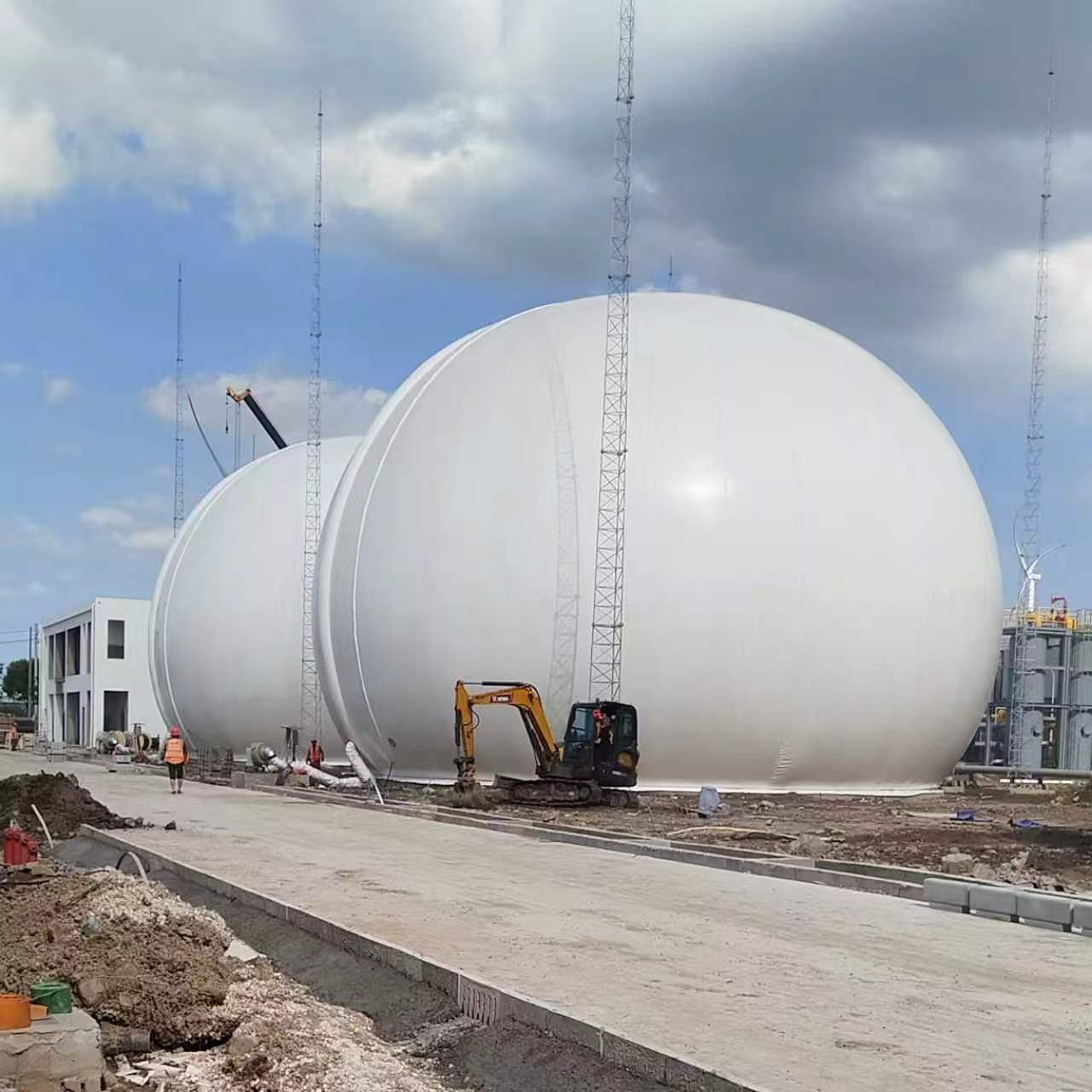
A biogas project in Jingjiang, Jiangsu Province, China, features a combination of standalone and integrated double membrane gas cover. The project configuration includes two 5,000 m³ standalone units and five 1,500 m³ integrated units, providing a combined nominal gas storage capacity of 17,500 m³.
By combining two types of double membrane gas holders, the project brings together dedicated gas storage and storage integrated with the process tanks.

1.How Double Membrane Gas Holders Work
A double membrane gas balloon typically consists of an inner membrane that stores biogas and an outer membrane that provides weather protection and maintains the external shape. A controlled air supply between the membranes supports the structure as the stored gas volume changes.
The inner membrane rises and falls as biogas enters or leaves the storage space. This allows the double membrane gas holder to accommodate fluctuations between biological gas production and downstream consumption.
Depending on the plant design, stored biogas may supply combined heat and power units, boilers, or biogas upgrading equipment.
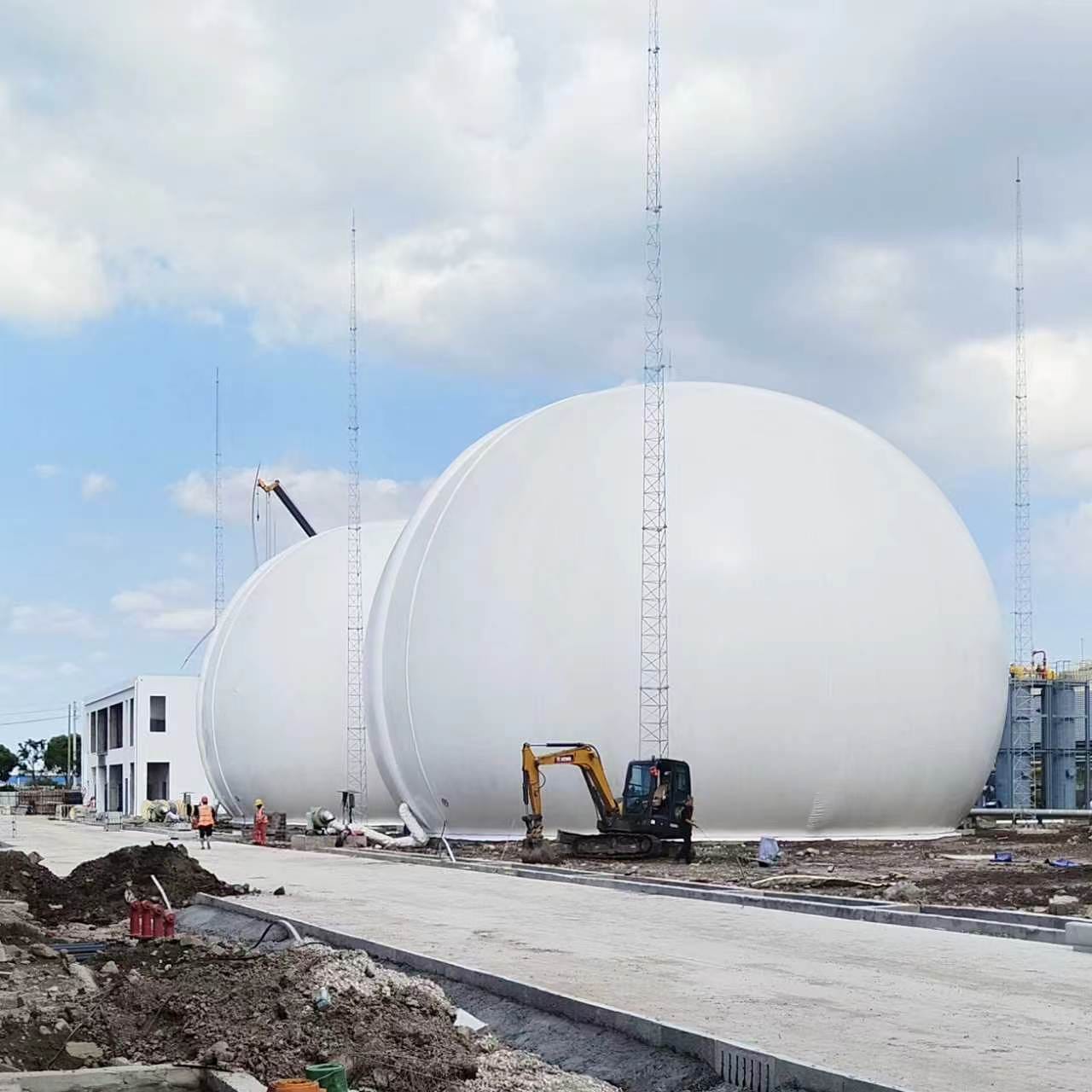
2.Two 5,000 m³ Standalone Double Membrane Gas Holders
The Jingjiang project includes two standalone double membrane gas holders, each with a nominal capacity of 5,000 m³. These units provide a total of 10,000 m³ of dedicated gas storage.
Standalone double membrane gas holders are installed separately from the digestion tanks. Their placement can be coordinated with the gas collection network, available site space, and downstream equipment.
This storage arrangement provides a buffer when gas production exceeds immediate demand. Stored biogas can then be released when consumption increases. The operating role of each gas holder depends on the plant’s piping layout, pressure controls, and gas management strategy.
3.Five 1,500 m³ Integrated Double Membrane Gas Holders
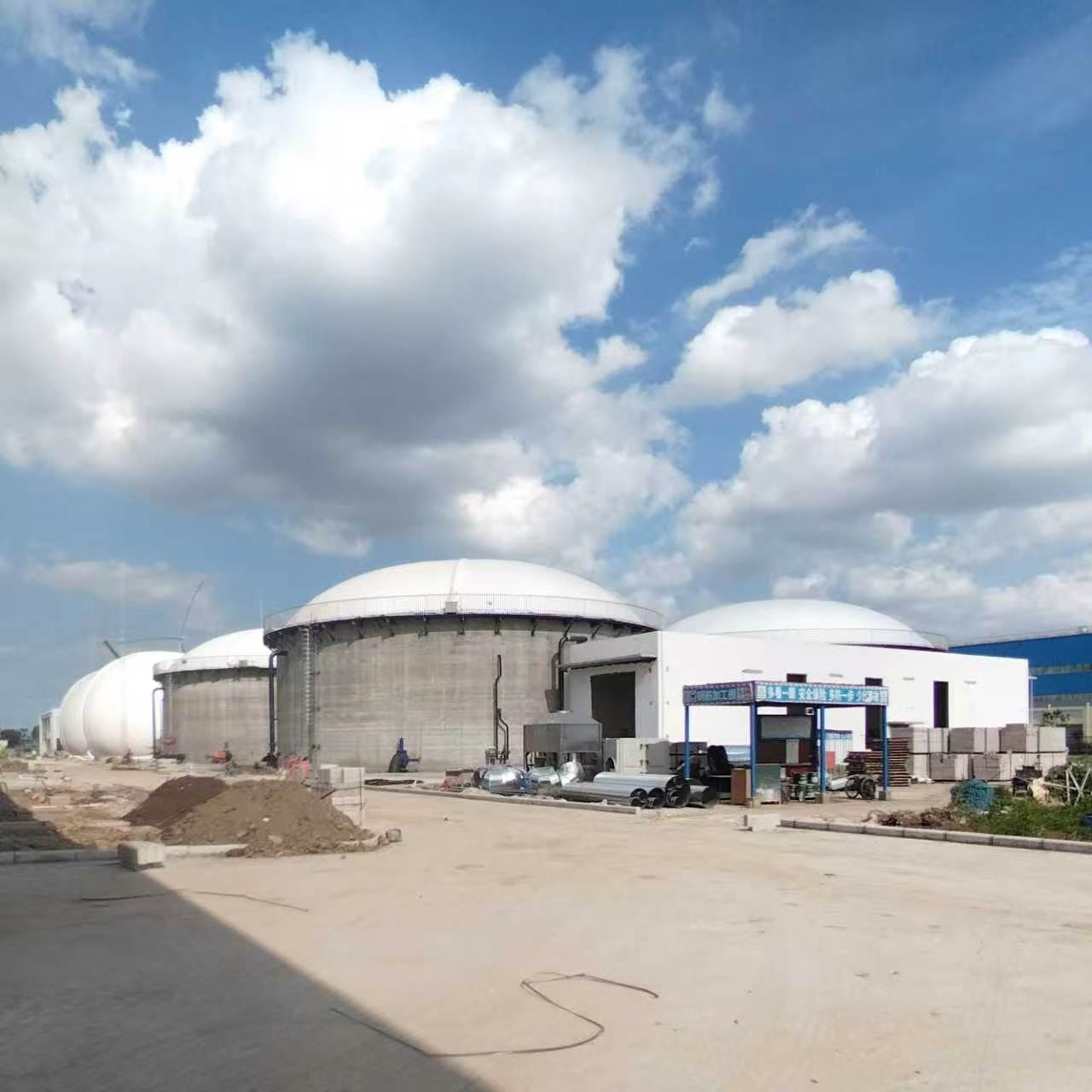
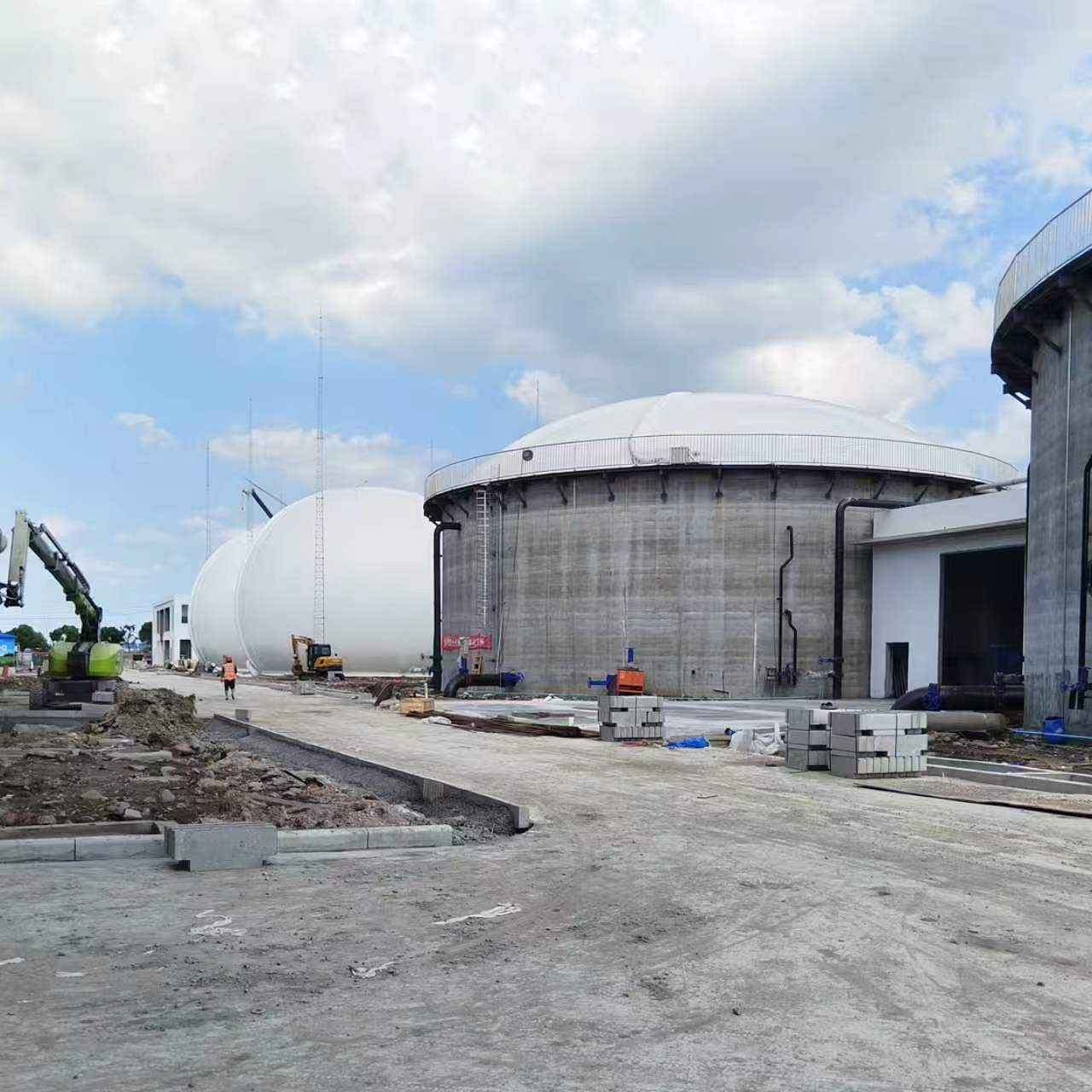
The project also features five integrated double membrane gas holders, each with a nominal capacity of 1,500 m³. Together, they contribute another 7,500 m³ of nominal storage capacity.
An integrated double membrane gas holder is typically mounted on top of a process tank, combining tank coverage with gas storage. By using the space above the tank, this configuration can reduce the need for separate ground-level storage structures.
The connection between the double membrane gas holder and the supporting tank requires careful engineering. Tank dimensions, anchoring, gas tightness, and structural loads must be considered as part of the overall design.
Planning Gas Storage for Your Biogas Project
The Jingjiang project illustrates how standalone and integrated biogas domes can be combined in a large-scale biogas installation. Its seven units provide 17,500 m³ of combined nominal storage capacity, with actual usable capacity depending on equipment design and operating conditions.
For a similar project, expected gas flow, required storage volume, operating pressure, site layout, and tank dimensions provide a useful starting point for technical discussions. These details help determine the appropriate size and configuration of double membrane gas holders for the plant.