
Installation of 5,000 m³ Biogas Holder Completed for Slaughterhouse Wastewater Treatment Project in Binzhou, Shandong
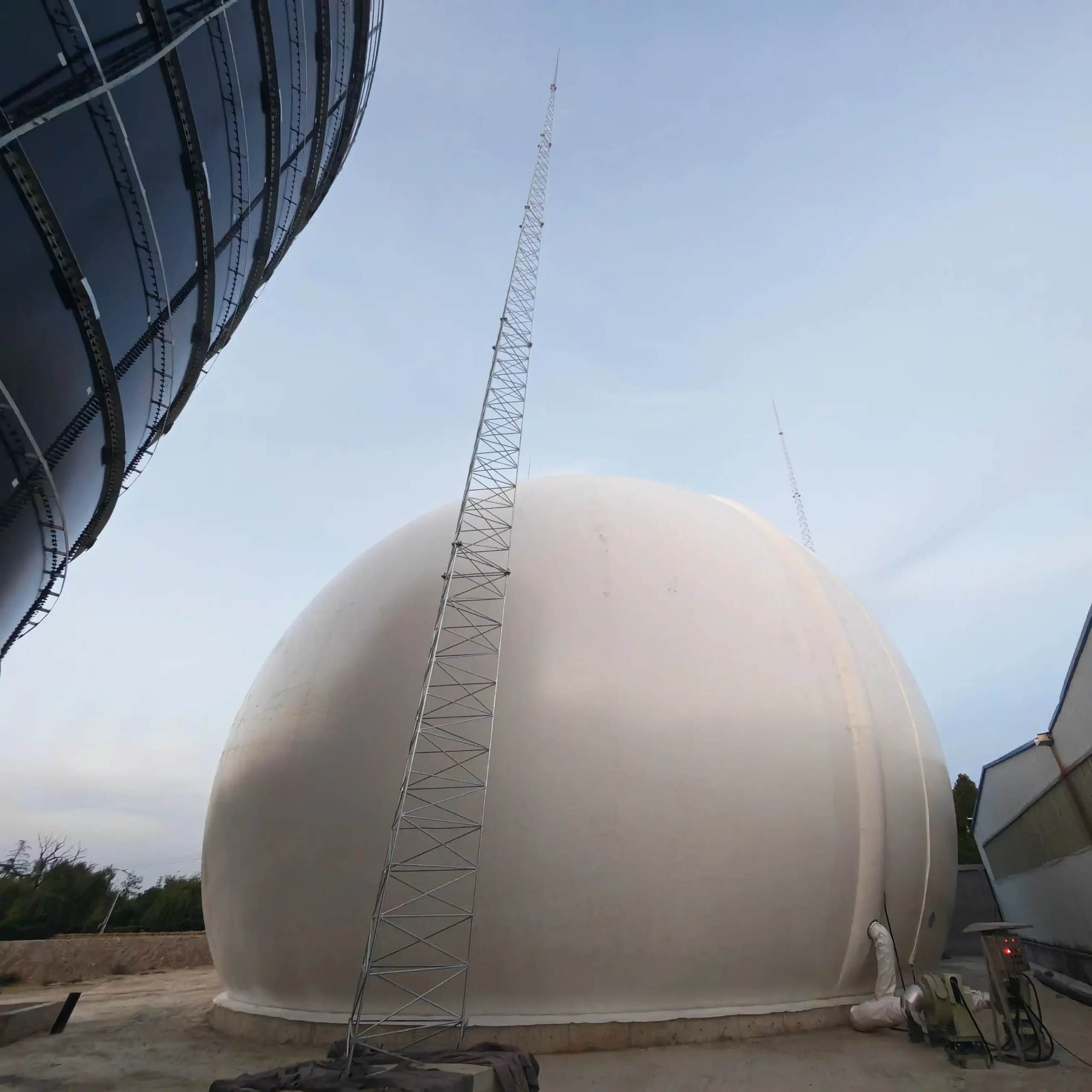
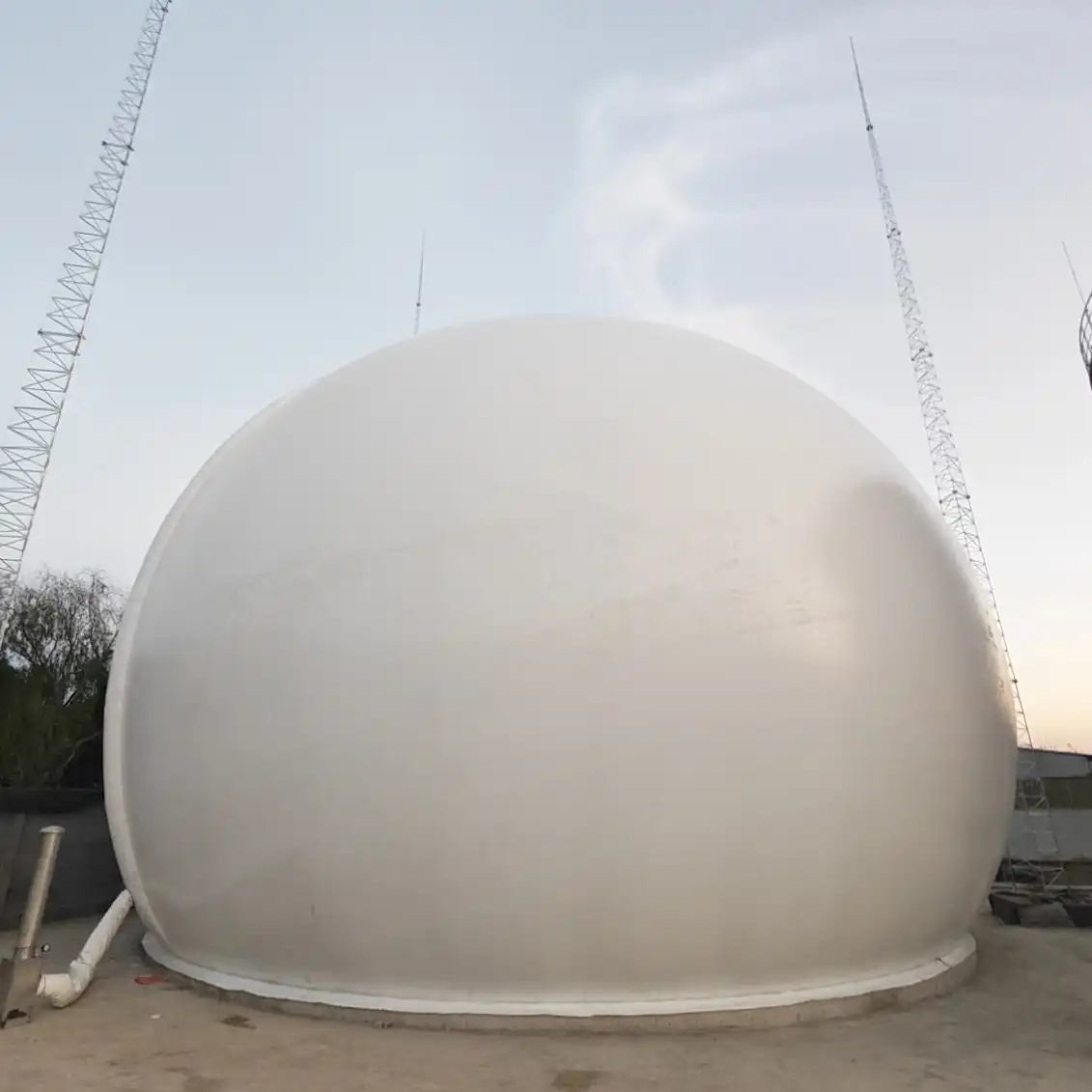
We are pleased to announce that the 5,000 m³ double-membrane biogas holder for a slaughterhouse wastewater treatment project in Binzhou, Shandong Province, has been installed and commissioned. The system is now operating steadily, providing safe and reliable biogas storage for the anaerobic digestion process and helping the customer meet stringent environmental discharge standards.
This project demonstrates our ability to deliver large-scale biogas storage solutions for high-strength organic wastewater treatment in the food industry. It also provides a reference for similar projects worldwide.

1. Project Background
Located in the Yellow River Delta, Binzhou is one of the leading livestock and meat-processing centers in Shandong Province and China. The region is home to numerous large-scale cattle, sheep, pig, and poultry slaughterhouses, which generate substantial volumes of high-strength organic wastewater every day.
Compared with domestic sewage, slaughterhouse wastewater has several distinct characteristics:
- High COD concentrations of 4,000–15,000 mg/L and BOD concentrations of 2,000–8,000 mg/L
- Large amounts of blood, fats and oils, animal manure, and suspended solids
- High nitrogen and phosphorus content
- A high pathogen load and significant pH fluctuations, which make biological treatment ineffective without proper pretreatment
The customer is a medium-sized integrated slaughterhouse processing several hundred animals per day. To meet local environmental requirements, the customer sought to upgrade its existing wastewater treatment facilities with three goals:
Significantly reduce odors and greenhouse gas emissions from the wastewater treatment area.s holder close to the preset value.
Ensure the treated effluent meets China’s Discharge Standard of Water Pollutants for the Meat Processing Industry and any stricter local discharge limits.
Reduce wastewater treatment operating costs by recovering biogas.
2. Why Choose a Double-Membrane Biogas Holder?
For high-strength organic wastewater such as slaughterhouse effluent, anaerobic digestion offers two major benefits: it can remove 70%–85% of COD while producing methane-rich biogas that can fuel boilers, provide heat for production facilities, or generate electricity.
Biogas production fluctuates with wastewater flow, temperature, and organic loading. Stable, efficient energy recovery therefore requires a reliable, low-maintenance, high-capacity buffer storage system. This is where a double-membrane biogas holder is particularly useful.
Compared with conventional steel gas holders, a double-membrane biogas holder offers:
Modular, scalable design: Standard capacities range from 100 m³ to 30,000 m³.
Lower cost: At the same capacity, it typically costs 40%–60% less than a welded steel gas holder.
Fast installation: On-site installation generally takes 7–15 days.
Corrosion resistance: The outer membrane uses UV-resistant PVC/PVDF-coated fabric, while the inner membrane uses a food-grade material designed to resist biogas permeation.
Automatic pressure control: Integrated blowers adjust automatically to maintain an operating pressure of 8–15 mbar.
Explosion safety: The system can automatically relieve pressure under abnormal operating conditions.
3. Installation and Commissioning
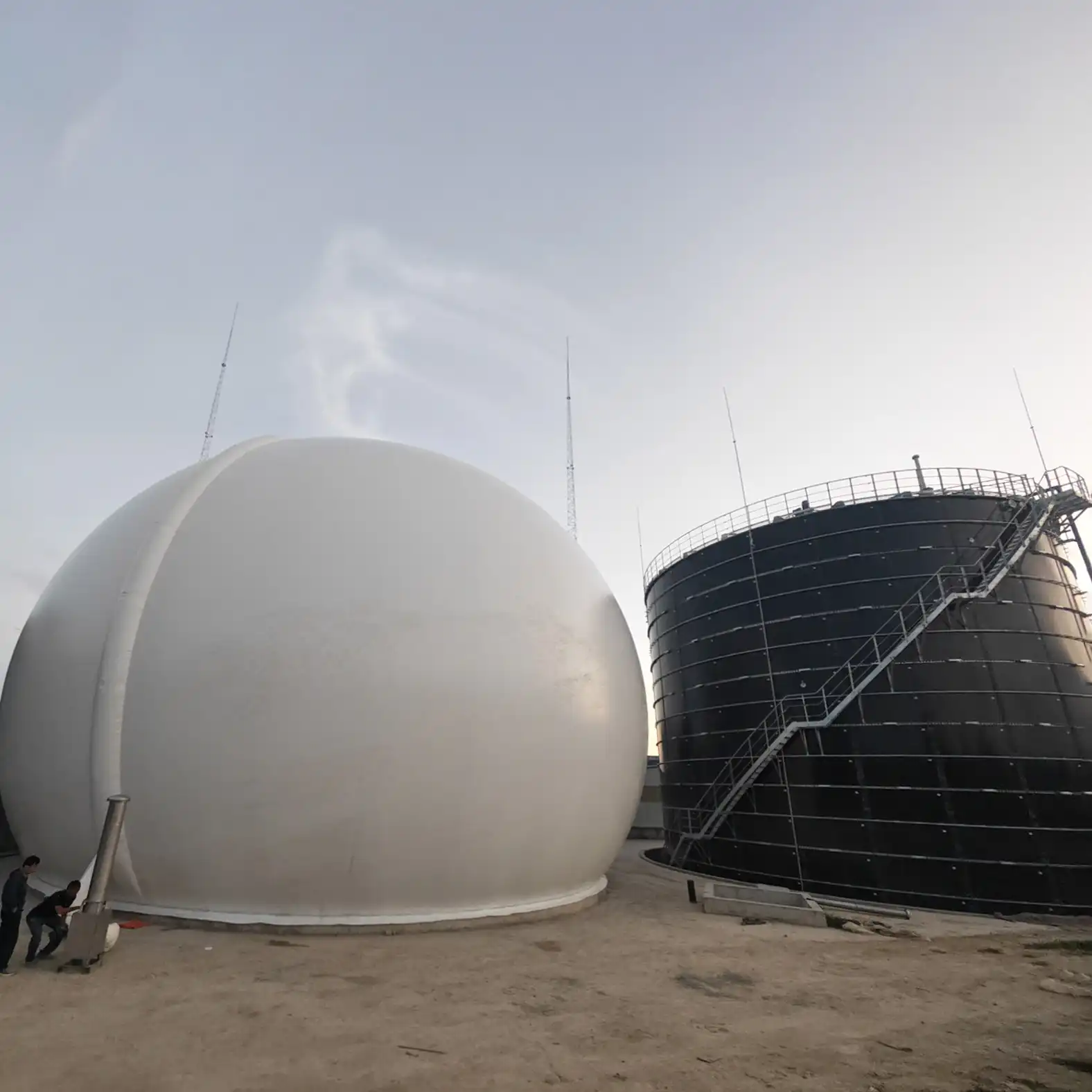
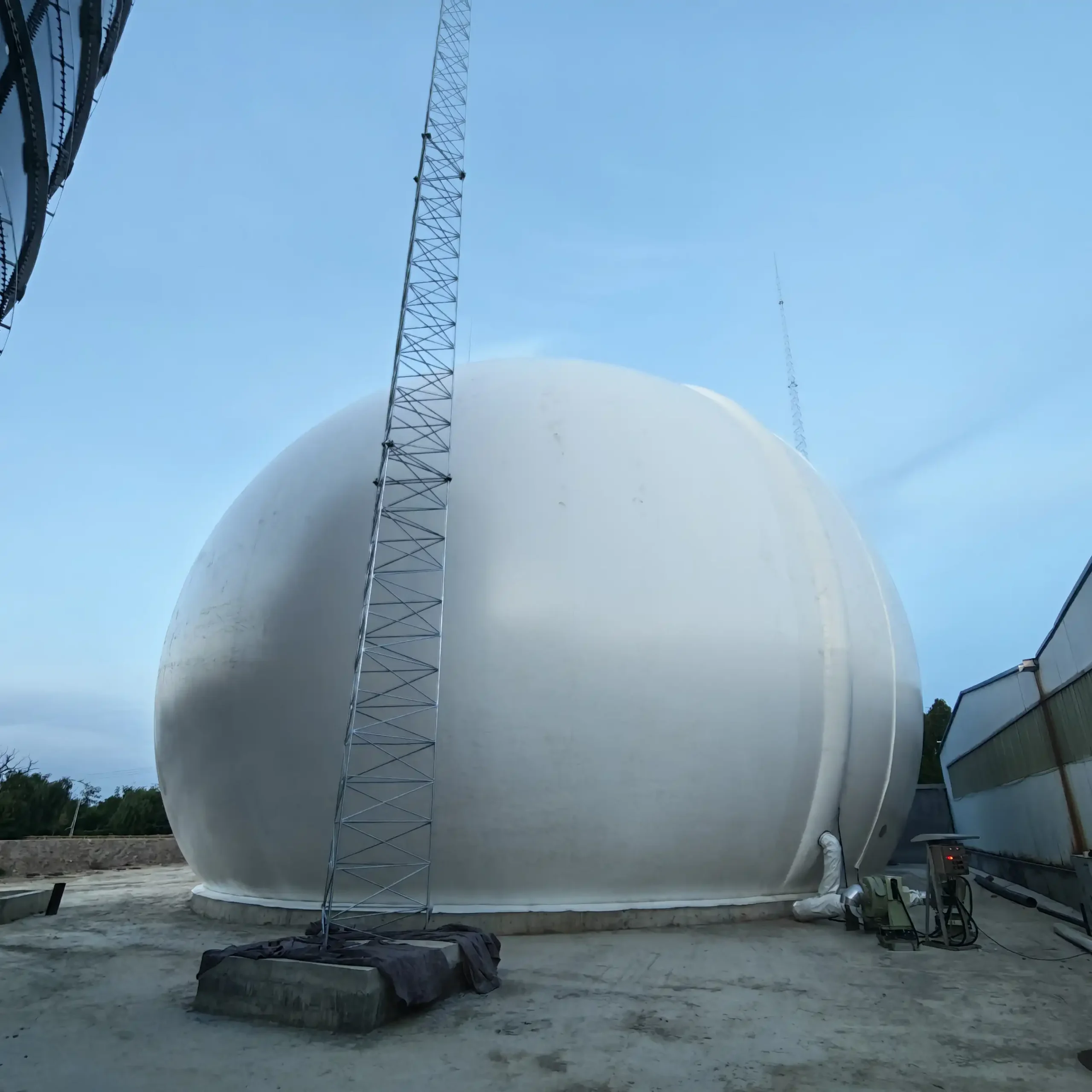
The biogas holder was installed above the concrete biogas collection dome of the UASB reactor. The work was completed in three stages.
Stage 1 — Foundation and Anchoring (Days 1–3)
The civil works contractor had completed the concrete foundation in advance. Our installation team fitted the anchor bolts and lower steel ring, ensuring that the structure was centered and level.
Stage 2 — Membrane and Steel Frame Assembly (Days 4–8)
The team unfolded the outer PVC membrane and secured it to the anchoring ring. They then installed and welded the inner gas-tight membrane and conducted a leak test. The steel support frame, top-mounted blower, and constant-pressure control skid were installed during the same stage.
Stage 3 — Gas-Tightness Testing and Commissioning (Days 9–12)
The system passed a 24-hour gas-tightness test with a pressure drop of less than 2%. The team completed the control cabinet wiring and sensor calibration, then connected the holder to the UASB reactor’s biogas collection pipeline. Following the first biogas fill, the system entered normal operation.
The entire installation, from tightening the anchor bolts to the first biogas fill, took just 12 days, substantially less time than a steel gas holder of the same capacity.
4. Operating Results and Customer Benefits
After three months of continuous operation, the customer reported the following results:
Lower carbon emissions: Annual carbon dioxide emissions decreased by approximately 1,200 tonnes.
Stable gas storage: The holder consistently buffered fluctuations between biogas production and consumption, with no abnormal pressure events.
Compliant effluent: The final effluent performed well below local discharge limits, with COD below 60 mg/L and ammonia nitrogen below 15 mg/L.
Energy recovery: Recovered biogas fuels a 1-ton boiler, replacing approximately 80,000 m³ of natural gas each year.
Lower operating costs: Heating costs for the anaerobic reactor fell by more than 60%.
Odor control: The fully enclosed collection and storage system significantly reduced complaints from nearby residents.
For more information or to discuss your project, please contact us.